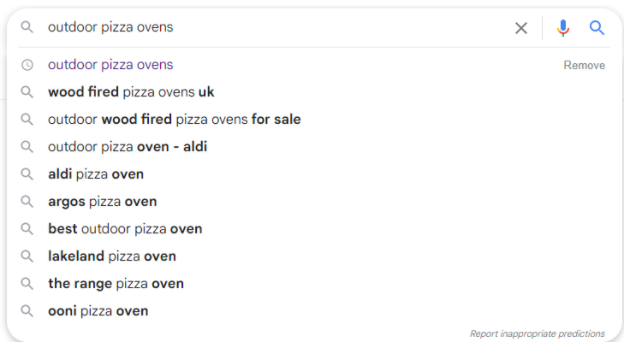
Let’s start with where your keywords need to be. You can use this to see how your page compares. In this guide we are researching outdoor pizza ovens. So we need to find out what customers are searching for. There are a few ways you can do this for free. Google is a good place to start. As any customer would do, they normally search for a short search term like this. That usually means that they don’t really know what they want, brands, types or prices.

Google can give us some clues based on what popular searches are for this product. For example, if we go further down the page we can see some results that indicate what visitors are looking for.
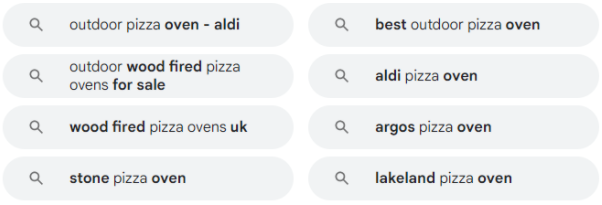
What this is telling us is that customers often try searching again for more specific results such as ‘stone pizza oven’ ‘aldi pizza oven’ wood fired pizza ovens’ and ‘best outdoor pizza oven’. Does your content have these alternate keywords included?
Include these keywords in a smart way. Don’t just put them into the content where they are forced, this is called keyword stuffing – Google has been wise to this for many years. Instead, find out which of these is more important for your content. You might not stock all these items, so it is worth filtering out the ones that are relevant to you, relevance plays a big part of SEO. There are many plugins that can help you with this, so worth a try.
Use them as headings or key part of your content
The keyword ‘best outdoor pizza oven’ would make a perfect blog article. You can structure a blog article on 5,8 or 10 of the best outdoor pizzas. Have a link in your product page to this blog, it is relevant. You can also compare this product to other products that you have. This makes for a great piece of reading for the customer. There might be features that your customer is looking, is your competitor doing this?
Back to the search for the keywords, if you click the search bar in google, you can also find similar search questions plus a few more (below). This is all based entirely on customer searches and is updated automatically. This is a good building block to see just how far you can drill down to capitalize on your keywords.